CASE STUDYTHE TYPEFORM HOMEPAGE
Completionists, avert your gaze: A homepage is never “done.”
You launch it, test it, then launch it anew—yes, even when it’s already performing well.
As the product grows and sprouts sellable new features on its journey upmarket, the homepage has to keep up. Likewise, when the competitive landscape shifts (à la AI), so too does the story the homepage tells.
Over the last few years, I’ve led the narrative for several successful homepage iterations at Typeform. Most recently, we saw increased scroll depth, 20% more target signups, and 12% more total signups (and counting).
In this case study, I’ll share how I took the homepage from strength to strength across three consecutive iterations—each outperforming the last—along with the rationale behind my work. So grab a coffee, get comfy, and we’ll begin.
2023The challenge
It’s 2023 and the market is crowded. Competition is fierce, with form builder-alternatives popping up left and right—many boasting similar features for cheaper prices. So it’s time for Typeform to go bold and differentiate.
The approach
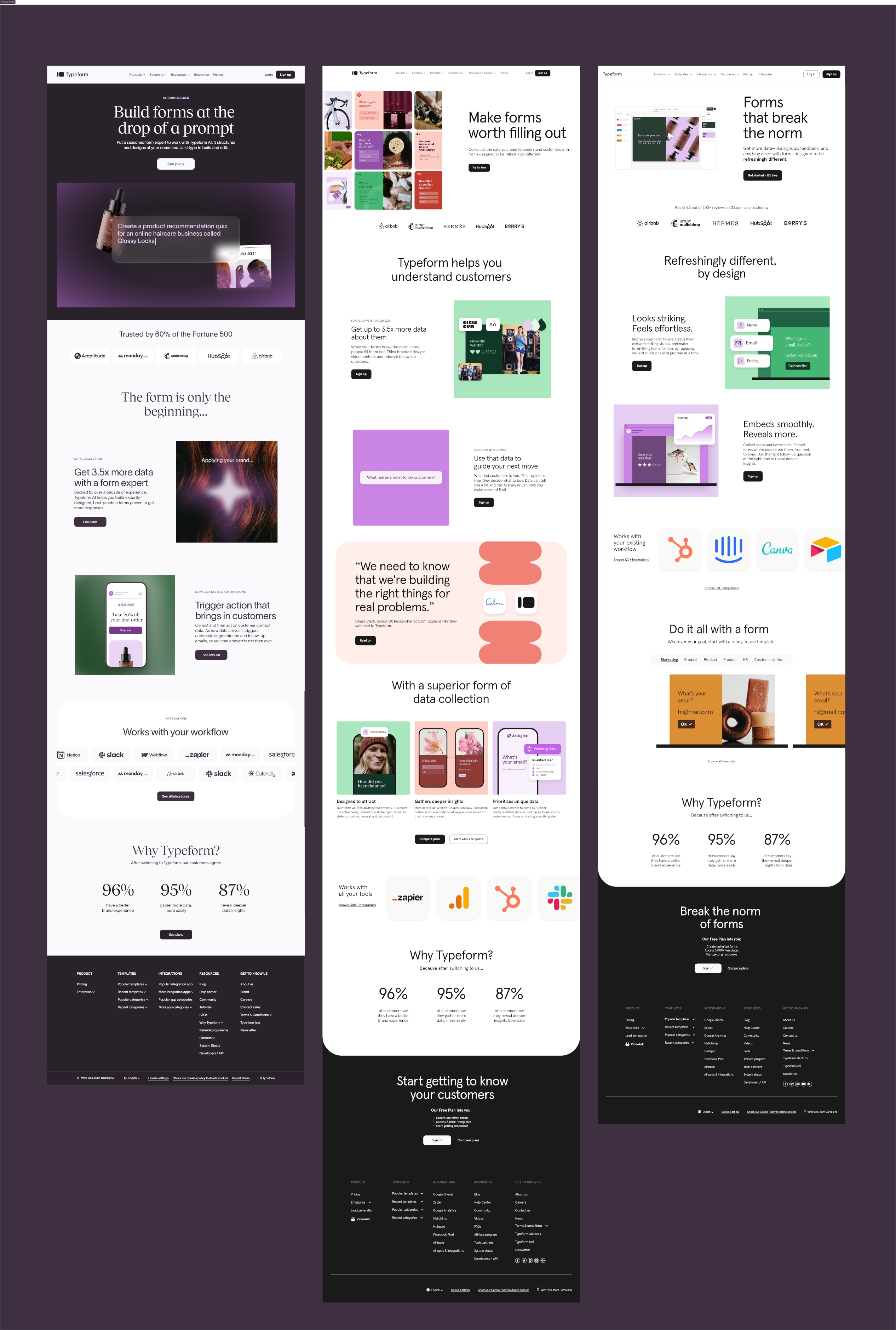
Fresh off the back off a rebrand, we launch a new homepage to establish Typeform as the anti-form.
The headline sets the scene: “Forms that break the norm.” It’s a statement of confidence, offering Typeform as the solution to the monotony of traditional forms. The use of subtle rhyme and idiom makes it memorable—something our competitors aren’t doing.
Then, the copy speaks to the senses. Where forms and data are stereotypically dull, Typeform promises a “refreshingly different” experience—a breath of fresh air in data collection. This juxtaposition builds intrigue, leaving the user curious: refreshingly different, how?
2024The challenge
It’s 2024. After years of marketing to a broad audience spanning everything from HR to academia, Typeform now has more clarity on its ideal customer profile: The Marketer. Our homepage needs to speak to these marketers specifically.
The approach
It’s no secret: people don’t love filling out forms. As a result, marketers struggle to get the lead and customer data they need.
The headline acknowledges this pain point: “Make forms worth filling out.” It’s a play on words—make forms (literally), but also make them worth filling out—so it lands with double impact. Typeform is offering a solution to lack of form engagement, promising that people will be inclined to actually fill out our forms.
Then, the copy speaks to the benefit: the more data you have, the better you “understand customers.” This nods to a (then) live brand campaign, doubling down on the pitch of Typeform as the best data collection tool for marketers. Repetition is key.
2025The challenge
It’s 2025, and artificial intelligence is the shiny new thing. Suddenly, the competitive landscape is awash with AI assistants tacked onto every product. Meanwhile, Typeform has rebuilt the form builder entirely to center around AI. It’s important people know how the product is evolving but, with AI language fast becoming buzzwordy, we need to tell a more compelling story.
The approach
Unlike most competitors, Typeform has been around for over a decade by this point. And in a market that’s saturated by unproven new products (courtesy of AI), reputation is more valuable than ever.
The headline positions Typeform within the AI space with a subtle way: “Build forms at the drop of a prompt.” Rather than stating the obvious—we can use the eyebrow for that—the copy plays on an idiom that indicates ease (At the drop of a hat), and swaps an expected word (hat) for an unexpected one (prompt) to make the reader stop and think through a technique called pattern interrupt.
Then, the copy leans into Typeform’s reputation, personifying our AI form builder as, “A seasoned form expert” that works for the user. Typeform is offering a solution to the complexities of data collection and automation, promising they will feel empowered to do more.
2025
2024
2023